Traditional clothing often carries much more than fabric, patterns, or decoration. Behind every embroidered shirt, carefully wrapped turban, woven fabric, or family jewelry piece, there are stories about identity, heritage, celebrations, craftsmanship, and the people who came before us.
Across AMC Bridge, we come from different countries, cultures, and traditions—and many of those traditions continue to live through what we wear during important moments, family gatherings, holidays, and celebrations.
We invited colleagues to share stories about traditional clothing that feels meaningful to them: outfits connected to their regions, symbols passed between generations, fabrics tied to local craftsmanship, or pieces that simply remind them of home.
From Ukrainian embroidered shirts and Uzbek chopons to Maharashtrian sarees and turbans, these stories show how clothing can preserve memory, connect generations, and reflect cultural identity in ways that remain meaningful even today.

Avinash Andhale, Software Development Engineer, India
Honor, Tradition, and the White Kurta
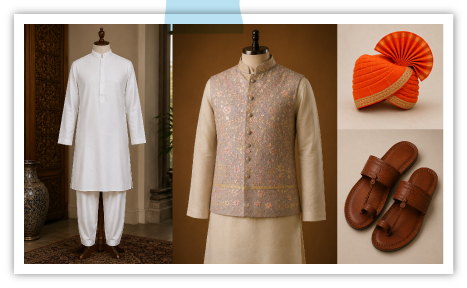
For me, traditional attire is a way to reconnect with my roots. My go-to traditional look is a crisp white cotton Kurta-Pyjama, a traditional long shirt paired with loose trousers, sometimes worn with a Bandi, also known as a Nehru jacket, a saffron Pheta, and Kolhapuri Chappals.
The Kurta is worn across India, but in Maharashtra, the simplicity of white cotton reflects groundedness and grace. The Pheta, or traditional turban, adds a special meaning to the outfit. It is a symbol of honor and respect. The Kolhapuri Chappals, handcrafted leather sandals from the region, complete the look and represent local craftsmanship and strength.
When Tradition Comes Alive
People usually wear this attire during moments connected with tradition, family, and celebration. It may be during major festivals such as Gudi Padwa, the Maharashtrian New Year festival, Ganesh Chaturthi, or Diwali; family milestones such as weddings and naming ceremonies; retirement farewells; cultural days at work; or historic celebrations such as Shiv Jayanti.
The Story Behind the Details
One of the most interesting details is that the Pheta is not just a turban. In Maharashtra, different styles can almost act like a regional marker. The Puneri style is more compact and structured, while the Kolhapuri style is larger, more expressive, and often has a long tail. Tying a traditional Pheta properly is a skill in itself, as it can be several meters long.
Kolhapuri Chappals also have their own story. Authentic ones are traditionally made without metal nails and stitched together with leather cords, which makes them flexible and durable. They are often treated with oil before being worn, so they can last for years.
For me, this attire marks a moment when we step away from the fast-paced modern world and return to something more rooted: tradition, family, and honor.

Pooja Gadhe, HR Specialist, India
Strength Woven Into a Saree
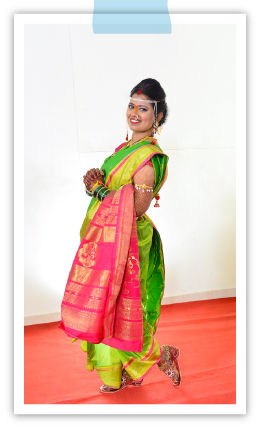
The traditional outfit I would like to share is the Nauvari Saree, a nine-yard saree from Maharashtra. It is called Nauvari because it is nine yards long, and it is draped in a unique dhoti-style that allows easy movement while still looking elegant.
Designed for Freedom and Strength
A Nauvari Saree is usually colorful and made of silk or cotton, often with gold borders. It is commonly paired with traditional jewelry such as a nath, or nose ring, bangles, and flowers in the hair.
Earlier, Maharashtrian women wore the Nauvari Saree in daily life because it was practical and comfortable. Today, it is mainly worn during weddings, festivals such as Ganesh Chaturthi (a Hindu festival), and cultural performances such as Lavani, a traditional folk dance.
A Symbol of Maharashtrian Identity
For me, the Nauvari Saree symbolizes strength, tradition, confidence, and Maharashtrian pride. Its draping style allowed women to move freely while working, traveling, and even fighting in historical times. That is why it also represents independence and courage.
One interesting fact is that different draping styles can represent different regions or communities within Maharashtra. The saree is also strongly connected with traditional dance and festive celebrations.
Memories Woven into Tradition
I wore a Nauvari Saree on my wedding day, so it holds very special memories for me. Wearing it made me feel deeply connected to my Maharashtrian roots and family traditions. The whole process—getting dressed, wearing traditional jewelry, and celebrating with family—made the day unforgettable. Even now, whenever I see a Nauvari Saree, it reminds me of the joy, love, and happiness of my wedding day.
Gulchiroy Khaydaralieva, HR Specialist, Uzbekistan
The Chopon: A Tradition of Respect and Hospitality
One traditional item I would like to share is the Chopon (also known as chapan or cho’pon) is a long traditional robe, usually reaching below the knees, and it can be worn by both men and women.
In Uzbekistan, especially in mountainous areas, people wear chopons as practical outerwear to protect themselves from the cold. But the chopon is not only practical. It is also connected with respect, hospitality, and special occasions.
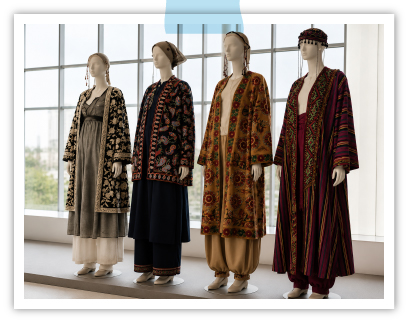
Chopon can be given as a gift, often to men, during weddings or important family events. It is also traditionally gifted to guests or elders as a sign of honor and respect.
Today, the chopon has also become part of modern fashion. Many designers use it in new and creative ways to represent Uzbek culture. So, while it remains connected to tradition, it also continues to live and change in contemporary style.

Aryan Prashant Karpe, Software Development Engineer, India
The Legacy of Maratha Warriors
I would like to share the traditional Maratha warrior attire associated with Chhatrapati Shivaji Maharaj, the legendary founder of the Maratha Empire, one of the most respected historical leaders in India.
This attire usually includes a cotton or silk angarkha, which is a long tunic, along with a dhoti or churidar-style lower garment, a waist sash, leather footwear, and the iconic Pheta, or turban. It was designed to be practical and comfortable, allowing free movement during battles and travel across the forts and mountains of Maharashtra.
Today, this attire is commonly seen during cultural festivals, historical celebrations, school performances, and events connected with Shivaji Maharaj Jayanti, a celebration honoring his birth anniversary.
Symbols of Honor and Courage
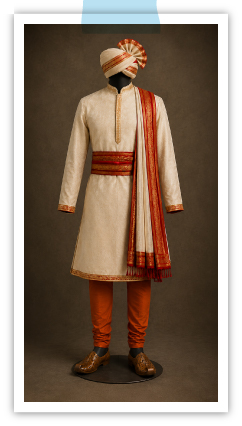
For many people in Maharashtra, this clothing represents bravery, self-respect, leadership, and pride in Marathi culture. The image of Shivaji Maharaj in traditional warrior attire symbolizes courage, good governance, and the spirit of protecting one’s people and culture. The Pheta is especially meaningful, as it is considered a symbol of honor and dignity.
One interesting detail is that the style and color of the Pheta can represent different regions or occasions. Saffron-colored turbans are strongly associated with Maratha pride and valor. Another detail is the practicality of the attire itself: it allowed soldiers to move quickly while riding horses or climbing mountain forts.
Growing up in Maharashtra, I heard many stories about Shivaji Maharaj at school and during local festivals. I remember watching cultural programs where people dressed as Shivaji Maharaj, wearing the traditional turban and warrior outfit. Those moments helped me appreciate the history and traditions of my state even more.

Nataliia Dolynska, Quality Assurance Automation Engineer, Ukraine
Vyshyvanka: A Piece of Home You Can Wear
Vyshyvanka is one of the most meaningful elements of Ukrainian national attire. It is a linen or cotton embroidered shirt decorated with embroidered patterns, which can be floral, geometric, hand-stitched, or machine-embroidered. The patterns differ from region to region, and each of them can carry its own symbolism.
A Symbol of Identity and Protection The Meaning Hidden in Patterns
For Ukrainians, the Vyshyvanka is much more than clothing. It is often described as a kind of “genetic code” that carries our history and identity. Historically, it was also seen as a talisman, or oberih—a form of spiritual protection. Every stitch was believed to protect the person wearing it from harm.
Today, wearing a Vyshyvanka is a quiet but powerful statement of national pride. It connects ancient roots with modern life and reminds us of strength, freedom, and unity.
The Meaning Hidden in Patterns
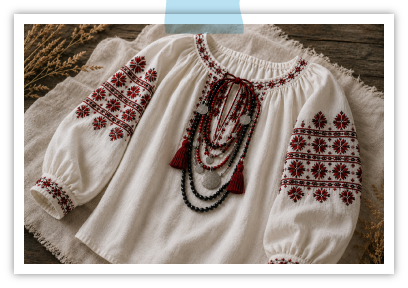
There are many interesting details behind Ukrainian embroidery. Geometric patterns such as diamonds and squares may symbolize fertility and the sun, while red poppies are often connected with memory and protection. There is also a tradition that the reverse side of the shirt should be as neat as the front, without messy knots. It reflects both the craftsperson’s skill and a deeper idea of inner integrity.
One of my favorite memories is connected with receiving my first specially chosen Vyshyvanka. Putting it on felt like a rite of passage. I wear it during family celebrations, national holidays, and sometimes even in professional settings or online meetings with international colleagues. It makes me feel grounded and connected to home. It is a piece of home that you can carry with you anywhere in the world.

Vikas Subhash Sarag, DevOps Engineer, India
Symbols of Respect and Heritage
In Marathi Hindu culture, two of the most iconic traditional outfits are the Nauvari Saree for women and the Dhoti-Kurta with Puneri Pagdi for men.
For men, traditional attire usually includes a white or cream-colored dhoti with a kurta, along with the famous Puneri Pagdi, a traditional turban. This outfit reflects simplicity, dignity, pride, and the cultural heritage of Maharashtra.
More Than Festive Clothing
Traditional Marathi attire represents pride, respect for heritage, and a strong connection to family and cultural traditions. The Nauvari Saree symbolizes grace and strength, as well as the important role of women in Maharashtrian history and society. The Dhoti-Kurta and Puneri Pagdi represent dignity, simplicity, and honor. The Pagdi, in particular, is seen as a symbol of respect and self-esteem.
One interesting fact about the Nauvari Saree is that its draping resembles a trouser-style outfit, which helped women move comfortably. Women warriors and queens from Maharashtra were known to wear this style, combining strength and elegance. Different regions of Maharashtra also have their own draping styles and turban traditions.
Family Traditions and Shared Memories
One of my favorite memories is seeing the whole family dressed in traditional clothes during festivals like Ganesh Chaturthi and Gudi Padwa. Growing up in Maharashtra, I enjoyed seeing colorful Nauvari Sarees, traditional jewelry, and Puneri Pagdis during celebrations and family functions. I also remember attending weddings and cultural programs where elders explained the meaning behind these traditions and encouraged younger generations to continue them.

Vishakha Pathak, Recruitment Specialist, India
The Saree: A Symbol of Grace and Heritage
I would like to share about the Saree, one of the oldest continuously worn garments in the world. It is a traditional South Asian garment worn mainly by women in India, as well as in Bangladesh, Sri Lanka, and Nepal.
Regional Craftsmanship and Identity
A saree is known for its elegance, versatility, and cultural meaning. In many parts of India, it is much more than just clothing. It represents tradition, grace, identity, and heritage.
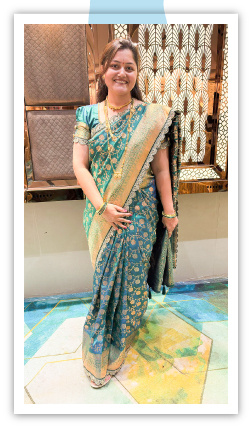
Different regions, families, and communities attach their own meanings to it. The fabric, weaving style, and draping method can often reflect where a person comes from. For example, a Banarasi Saree from North India or a Paithani Saree from Maharashtra each carries its own regional craftsmanship and history.
Sarees are commonly worn during weddings, festivals, religious ceremonies, and important family events. Bridal sarees especially symbolize prosperity, joy, and new beginnings.
For me, the saree is a symbol of cultural continuity. It connects generations, regions, and traditions while remaining one of the most graceful and meaningful garments in Indian culture.
Return to blog pageYou will also be interested